Receipt Roll & Cashier Paper Printing for Shops and Restaurants in Qatar: Sizes, Materials and Customisation
In any shop, restaurant or pharmacy in Qatar, there's one small piece of paper that almost every customer touches before walking out the door: the cashier receipt. Yet thermal receipt rolls remain one of the most randomly purchased supplies of all — bought with no thought given to quality or customisation, even though they represent an almost free daily marketing opportunity. In this guide we explain the different types of thermal rolls and their sizes, how to choose the right material for your printer, and how to turn the back of your receipt into advertising space for your brand in Doha and every city across Qatar.
What is thermal paper and how does it work?
Thermal paper is paper coated with a heat-sensitive chemical layer. A cashier printer uses no ink and no ribbon — instead, a heated print head touches the paper and the text appears in black wherever heat is applied. That means faster, cheaper operation with less maintenance, but it also means the quality of the paper itself is everything: poor stock produces faded prints, leaves residue on the print head and shortens the life of the machine.
That's why we group the rolls available on the Qatari market into three practical categories:
- Economy roll: lower paper weight and a basic thermal coating — suitable for fast turnover and receipts that aren't kept.
- Standard roll: the most widely used option in supermarkets and restaurants, offering a good balance between price and print clarity that holds up for weeks.
- Premium roll with protective coating: resists friction, humidity and oils — ideal for kitchens, coffee shops and receipts that customers keep for warranty or exchange purposes.
Standard roll sizes in Qatar
Choosing the wrong size means a roll that won't fit the printer tray, or paper that skews as it prints. The most common sizes are:
- 80 mm width: the standard for thermal POS printers in restaurants, supermarkets and bakeries, with varying diameters (50 / 60 / 70 mm) depending on tray capacity.
- 57 mm width: for portable bank card machines, compact POS units and service kiosks.
- 76 mm two-ply (plain, non-thermal paper): used in some older cash registers that run on an ink ribbon and need one copy for the customer and one for accounts.
- Kitchen Order Ticket sizes: 80 mm rolls used to print preparation orders, where a stock that withstands kitchen heat is preferable.
A practical tip: always keep the core of an old roll and write the width and diameter on it — or simply send a photo of your printer and current roll over WhatsApp so we can pin down exactly what you need without trial and error.
Promotional printing on the back of the roll: the cheapest advertising in your store
The thermal side is reserved for the receipt itself, but the back of the paper is blank space that can be pre-printed in one or two colours. Picture a shop issuing 200 receipts a day — that's 6,000 marketing messages a month placed directly into your customers' hands. The most popular uses include:
- Your logo, branch name, contact numbers and Instagram handles.
- A discount coupon for the next visit or a promo code for your online store.
- Your exchange and return policy, to reduce disputes with customers.
- A QR code directing customers to a service review form or your digital menu.
- Seasonal messages such as Ramadan or National Day offers.
To keep this printing consistent with the rest of your printed material, it's best to draw the colours and fonts from your brand's complete brand identity file — exactly as you would with business cards, menus and bags.
Key design considerations
- The actual print width is slightly narrower than the roll width, so leave safe margins.
- The design repeats along the length of the roll, so keep it simple and repeatable without cutting through the logo.
- Avoid solid dark backgrounds; they consume more ink and make any text printed over them harder to read.
- Make sure the QR code is clear and no smaller than 2 cm so phones can scan it reliably.
Thermal or carbonless (NCR)? Choose by purpose
Many business owners in Doha confuse the two. The simple rule is:
- Thermal paper: for fast daily receipts, kitchen orders and electronic payment slips. Quick and inexpensive, but not suited to long-term filing.
- Carbonless NCR books: for payment vouchers, delivery notes, service contracts and any invoice that needs a signature and multiple copies to keep on file. If your business deals with government entities or annual accounting, it's best to prepare printed invoices and receipts with sequential numbering alongside your cashier rolls.
For most stores, the ideal solution is to use both: thermal rolls at the point of sale, and an NCR book for official transactions and supply orders.
How should you store rolls in Qatar's climate?
Qatar's summer heat and high humidity are direct enemies of thermal paper. Follow these rules to stop rolls from darkening or fading before you even use them:
- Keep the cartons in an air-conditioned store room, away from direct sunlight and windows.
- Don't place rolls on top of heat-emitting equipment or near external air-conditioning vents.
- Keep them away from soft plastics, cleaning products and oils that may react with the thermal coating.
- Apply the first-in, first-out (FIFO) principle when issuing stock from the store room.
- Only open the protective bags when a roll is actually needed.
How do you calculate your monthly requirement?
A simple estimate: multiply your daily number of receipts by the average receipt length, then divide by the roll length. For example, a restaurant issuing 250 receipts a day at an average of 20 cm each uses 50 metres a day. If the roll is 50 metres long, you need roughly one roll per day — around 30 rolls a month per point of sale — plus 15% as a buffer for errors and reprints. This calculation helps you buy in bulk at a better price and avoid running out of stock during peak periods.
Common mistakes to avoid
- Buying the cheapest roll available without checking print clarity; the apparent saving ends up costing you in print head maintenance.
- Failing to match the roll diameter to the printer tray, leaving the cover unable to close and printing at a standstill.
- Leaving the back of the roll blank instead of putting it to work for your marketing.
- Printing contact numbers or outdated offers in excessive quantities; order medium runs when your offers change frequently.
- Overlooking consistency between your receipt and the rest of your store's printed items, such as labels and stickers and shopping bags.
Why Q Trend?
At Q Trend we supply thermal cashier rolls in 57 mm and 80 mm widths using tested materials, along with promotional printing on the back of the roll and content design if you don't already have artwork ready. We serve restaurants, cafés, pharmacies, supermarkets, beauty salons and workshops in Doha, Al Wakrah, Al Rayyan, Al Khor and Umm Salal, with the option of regular monthly supply so your cashier never stops during peak hours. We can also bundle your other printing needs into a single order: invoices, envelopes, menus, bags and official stamps & seals.
Want cashier rolls with consistent quality and your store's logo printed on every receipt? Send us the size of your current roll and the number of points of sale you operate on WhatsApp at +974 7784 9090 and we'll send you a clear quotation, a material sample and a monthly supply plan tailored to the size of your business in Qatar.
Frequently Asked Questions
Which roll size suits my cashier machine?
Can I print my store's logo on cashier paper?
What's the minimum order quantity, and how long does production take?
Why do cashier receipts fade over time, and how can I prevent it?
Need printing or advertising services in Qatar?
Contact Q Trend today for a free quote on your project in Doha and across Qatar.
Related Articles
Printing & Supplies for Flower Shops and Gift Styling Businesses in Qatar: Gift Cards, Wrapping Paper and Bouquet Labels
Engineering & Plotter Printing in Qatar: Sizes, Materials and Binding
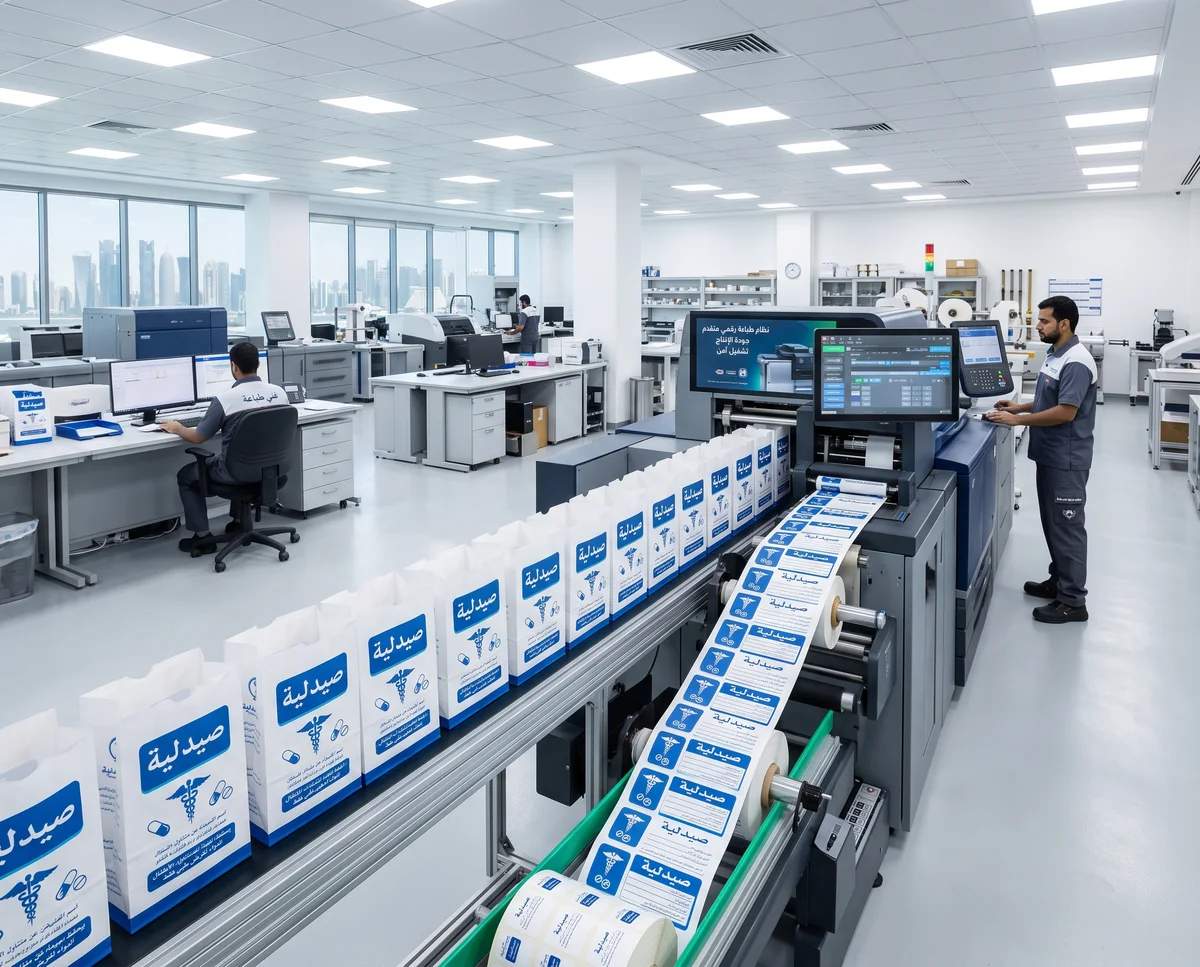
Pharmacy Printing & Supplies in Qatar: Medicine Bags, Dosage Labels and Shelf Signage