Foamex vs Acrylic Signage in Qatar: Differences, Uses and Installation
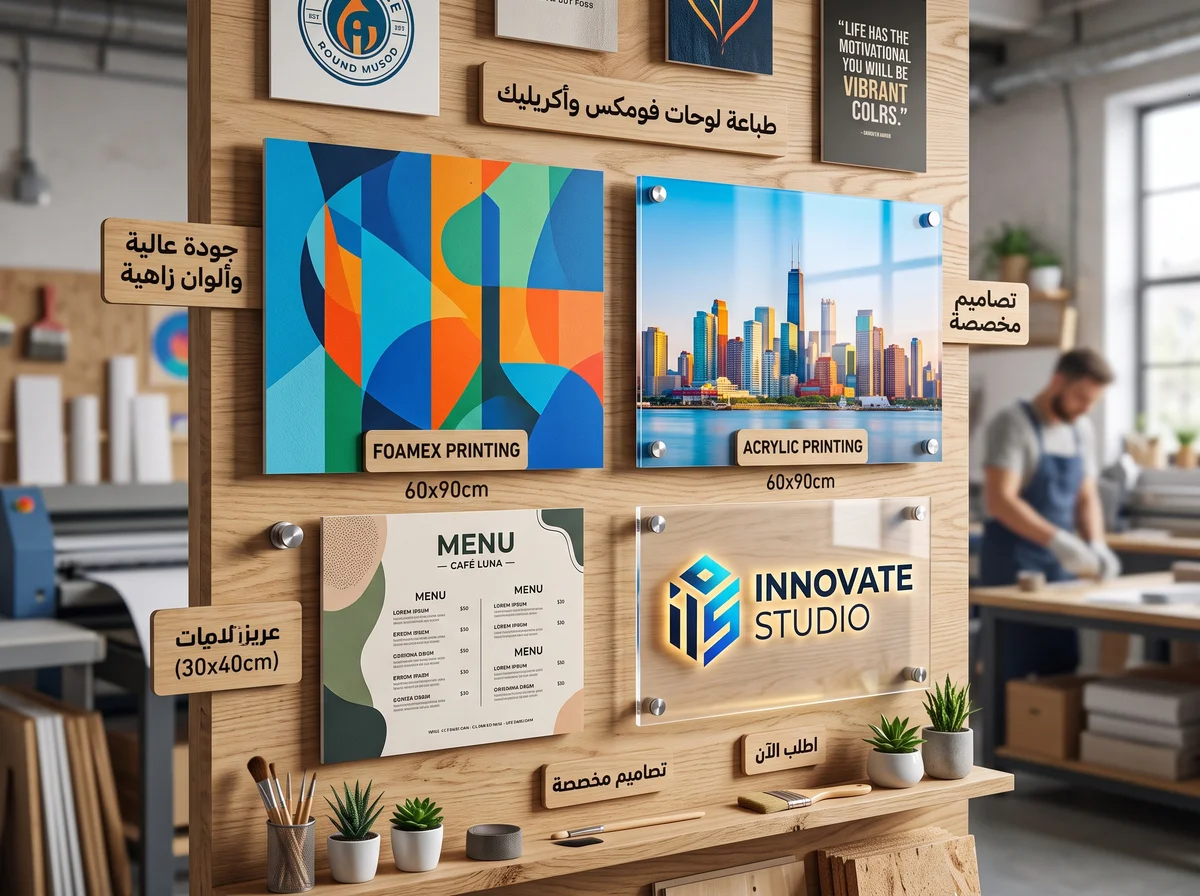
When it comes to producing an indoor sign, a nameplate or a reception backdrop, many business owners in Qatar get stuck on one question: Foamex or acrylic? Both materials are among the most widely used in Doha's printing and advertising market, yet each has its own character, price, lifespan and ideal applications. In this guide from Q Trend, we explain the technical differences between them in practical terms and help you pick the material best suited to your project — without overspending and without sacrificing a professional look.
What is Foamex (foam PVC)?
Foamex is a plastic sheet made of PVC with an internal foam structure, which makes it lightweight and easy to cut, engrave and install. It normally comes in solid colours (white being the most requested) and in thicknesses from 3 mm up to 20 mm. It can be printed on directly using UV digital printing, or a printed vinyl sticker can be applied to its surface and then trimmed to the required size.
- Lightweight: ideal for mounting on gypsum board and lightweight walls.
- Economical: noticeably cheaper than acrylic for the same size.
- Easy to cut: can be contour cut into any shape for large letters and figures.
- Matte surface: perfect for text and instructions because it doesn't reflect light.
Best uses for Foamex
- Exhibition and conference boards and backdrops for temporary events.
- Price and promotion boards inside shops and pharmacies.
- Safety and instruction signs in warehouses and factories.
- Wall décor and cut-out shapes for kids' areas and restaurants.
- Temporary construction project boards and on-site wayfinding signs.
What is acrylic (plexi)?
Acrylic is a rigid, highly transparent plastic known commercially as plexiglass. It offers a gloss very close to glass with less weight and greater impact resistance. It is available clear, coloured, opal (for backlighting) or with a matte finish. It is shaped by laser cutting or CNC routing and fixed with projecting metal standoff bolts that give the sign depth and an elegant shadow.
- Premium look: ideal for law firms, real estate offices, clinics and hotels.
- Good resistance to heat and humidity — better than thin Foamex.
- Lets light through: perfect for illuminated signs and illuminated letters.
- Longer lifespan, keeping its gloss for years with simple cleaning.
Best uses for acrylic
- The company logo in the reception area, mounted proud of the wall.
- Office and department nameplates and room numbers.
- Brochure and menu holders and clear tabletop stands.
- Faces for illuminated letters and light boxes.
- Acrylic awards and achievement plaques.
A quick comparison to help you decide
- Cost: Foamex is markedly cheaper; acrylic is a bigger investment but lasts longer.
- Appearance: Foamex is practical and matte; acrylic is glossy, refined and gives a glass-like feel.
- Lifespan: Foamex suits indoor projects lasting from a few months to a year or two; acrylic lasts for years.
- Weight and installation: Foamex is lighter and easier to hang; acrylic is heavier and needs precise fixing.
- Shaping: Both can be cut into shapes, but acrylic's laser-polished edges look far nicer.
The practical rule we follow with our clients in Doha: if the sign carries your brand identity and is the first thing customers see when they walk in, go for acrylic. If the message is operational, seasonal or temporary, Foamex is the smart, budget-friendly choice. And for large permanent exterior façades, the best option remains Aluminium Composite Panel with illuminated 3D letters, or a complete solution through our shop signage service.
Common thicknesses and when to use each
- 3 mm Foamex: small signs, reinforced posters, shelf price tags.
- 5 mm Foamex: the most popular choice for medium indoor signs and photo backdrops.
- 10 mm Foamex and above: cut-out letters, raised décor and large signs that need rigidity.
- 3 mm acrylic: door signs, small stands and document holders.
- 5–8 mm acrylic: reception logos, department signs and double-layer plaques.
- 10 mm acrylic: large logos, awards and premium fascias with polished edges.
Production and finishing techniques
Direct UV printing
Colours are printed straight onto the Foamex or acrylic surface with ink cured by ultraviolet light, giving excellent colour stability and high image detail. On clear acrylic, you can reverse print from the back with a supporting white layer to achieve a luxurious glass-like finish.
Laser and router cutting
Laser cutting gives acrylic clear, polished edges, while CNC routing suits Foamex, thicker sheets and large shapes. The technique you choose affects the shape of the letters and the accuracy of tight corners in your logo.
Mounting methods
- Strong double-sided tape for lightweight signs on smooth surfaces.
- Stainless steel standoff bolts to hold the sign 15–25 mm off the wall.
- Hidden rear fixings for three-dimensional logos.
- Table or floor stands for portable exhibition signage.
Tips that save you costly mistakes
- Send your logo in vector format (AI / PDF / EPS) to guarantee a clean, crisp cut.
- Specify Pantone or CMYK colours precisely, as on-screen colours differ from print.
- Consider viewing distance: text read from 5 metres needs a letter height of at least 5 cm.
- Don't place glossy acrylic directly facing a bright window — reflections hide the text; use a matte finish instead.
- Ask for a site survey before production to determine the wall type and the right fixing method.
- Keep your signage materials consistent with the rest of your printed items so your identity looks cohesive — exactly what our complete brand identity service delivers.
Care and maintenance in Qatar's climate
Heat and dust in Qatar affect the look of signage over time. We recommend cleaning acrylic with a soft cotton cloth, water and a mild soap, and avoiding alcohol or abrasive cleaners that cause white scratches. Foamex can simply be wiped with a damp cloth, and it's best installed away from direct heat sources such as hot air-conditioning outlets or nearby lighting. And with any complete interior scheme, signage can be combined with stickers and decals on glass and walls to complete the look.
Why Q Trend?
At Q Trend we produce Foamex and acrylic signage from design through to installation across Doha and every city in Qatar: we help you choose the right material and thickness for your budget, provide a design preview before production, and use genuine materials backed by a guarantee on cutting and installation. Whether you're fitting out a new office in West Bay, an exhibition stand at Doha Exhibition Centre, or a new branch for your store, we have a ready solution with the quality and speed you need.
Ready to produce your sign? Send us your logo and the size you need, and we'll come back shortly with a clear quotation and a comparison of material options. Get in touch with the Q Trend team on WhatsApp at +974 7784 9090 for a free consultation on whether Foamex or acrylic is the better fit for your business in Qatar.
Frequently Asked Questions
What's the main difference between Foamex and acrylic?
Is Foamex suitable for outdoor installation in Qatar?
What's the right acrylic thickness for an office sign?
How long does it take to produce a Foamex or acrylic sign in Doha?
Need printing or advertising services in Qatar?
Contact Q Trend today for a free quote on your project in Doha and across Qatar.
Related Articles
Kindergarten & Nursery Printing and Supplies in Qatar: From Student Folders to Classroom Signage

Printing & Supplies for Gyms and Sports Clubs in Qatar: From Membership Cards to Workout Wall Charts
Printing & Supplies for Shipping and Logistics Companies in Qatar: Waybills and Parcel Labels