Light Boxes & Illuminated Signage in Qatar: Types, Technologies and Installation
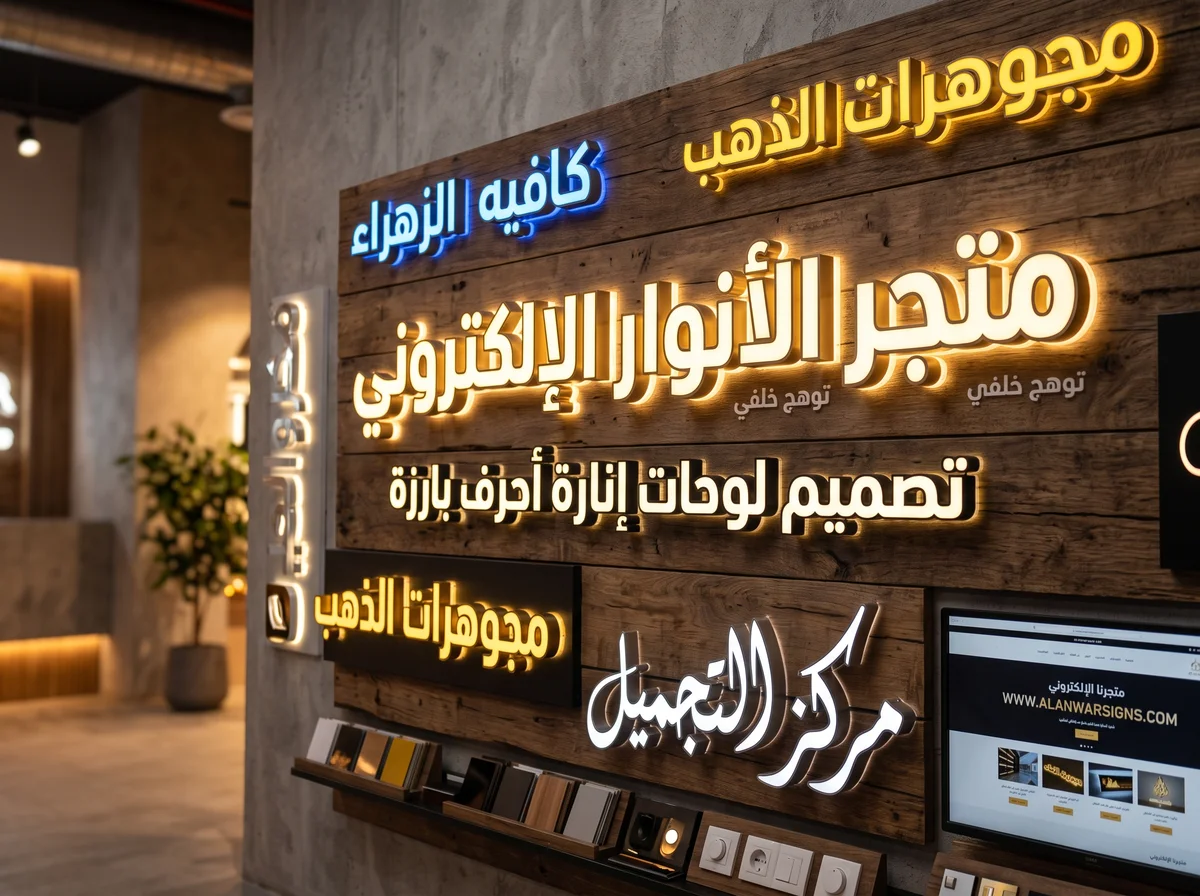
When you drive through the streets of Doha at night or walk through a shopping mall, you'll notice that the shops catching your eye first are the ones with a clean, clearly lit sign. Light boxes are among the most practical and widely used outdoor advertising solutions in Qatar, because they combine a clear message by day with a strong presence by night — all at a reasonable cost. In this guide we explain the types of light boxes, the materials and lighting technologies involved, and the installation and maintenance standards suited to Qatar's climate.
What is a light box and what is it made of?
A light box is an enclosed advertising box mounted on a shopfront or suspended indoors, and it consists of four essential components:
- The frame: usually powder-coated aluminium or steel, which determines the box's depth, durability and resistance to moisture.
- The face: acrylic, polycarbonate, translucent backlit flex, or fabric stretched into the frame.
- The lighting unit: waterproof LED modules laid out to a calculated spacing to guarantee even light distribution with no "hot spots".
- Power supply and control: a high-quality power supply, and sometimes a timer or photocell sensor for automatic switching.
The difference between a cheap illuminated sign and a professional one doesn't show on day one — it shows after six months. Is the light still even? Has the acrylic yellowed? Has cleaning water or rain seeped inside? This is exactly why it pays to choose a supplier who knows the specifications of the Qatari market.
The most widely used light box types in Qatar
1) Vacuum-formed acrylic light box
Here the acrylic is heat-formed so the logo and lettering stand out in 3D within a single continuous face. This is the most premium option in the light box category, and it's widely used by restaurant chains, pharmacies and telecom stores because it delivers a consistent, professional look that is hard to imitate.
2) Backlit flex light box
The most common choice for large formats and long shopfronts. The design is printed on translucent flex made specifically for backlighting and stretched over the frame. Its advantages: a lower cost per square metre, and the ability to replace only the print when you change an offer or rebrand — without changing the frame — which makes it ideal for seasonal promotions.
3) Fabric / SEG light box
This uses dye-sublimation printed polyester fabric fixed into the frame with a silicone edge strip. It looks clean, is lightweight and slim in depth, and suits exhibitions, indoor halls, malls and upscale offices. The fabric can be swapped out and washed easily, making it an excellent option for businesses that change campaigns frequently.
4) Double-sided boxes and projecting signs
Mounted perpendicular to the wall so they're visible from both directions, these are a smart solution for shops on narrow streets or inside mall walkways, since passers-by see them before they reach the shopfront. They are widely used by clinics, pharmacies and service offices in areas such as Najma, Al Sadd and Umm Ghuwailina.
5) Illuminated menu boards and price boards
Designed for restaurants, cafés, laundries and fast-food outlets, and mounted above the counter. They allow menu panels to be swapped out easily, and their impact is directly tied to the quality of the menu design itself in terms of visual hierarchy and price clarity.
Design standards for a successful illuminated sign
- Contrast before beauty: choose strong contrast between background and text; very light colours lose their sharpness when illuminated, and very dark colours block the light.
- Letter height versus reading distance: a practical rule of thumb: every 2.5 cm of letter height is readable from roughly 10 metres away. Measure the distance from the street to the shopfront before deciding on the size.
- Keep the content short: business name + specialty in two words + one contact method. A sign is not a brochure.
- Stay on brand: use the company's official brand colours and fonts as set out in the complete brand identity guidelines, so the sign sits in harmony with your printed materials and digital presence.
- Bilingual layout: in Qatar it's preferable to include both Arabic and English in a balanced arrangement, while observing municipality requirements regarding the priority of the Arabic language.
Lighting techniques: how to avoid a "patchy" sign
The most frequent complaint after an illuminated sign is installed is uneven light. The cause is usually one of three: insufficient LED module density, a box depth unsuited to how far the light needs to spread, or the absence of a white reflective layer inside the box. In a professional build, we specify:
- An appropriate box depth (typically 10–20 cm for flex, and less for edge-lit fabric boxes).
- Equal spacing between module rows, calculated to the sign's dimensions rather than estimated.
- A consistent colour temperature (6000K–6500K for pure white) to avoid variations in white tone between sections.
- Loads split across more than one power supply, with a separate electrical box that is easy to service.
Installation and maintenance in Qatar's climate
Installation begins with a site survey and physical measurement of the shopfront, and deciding on the mounting method (directly on the wall, on a metal sub-frame, or recessed into the façade opening). On new projects, it's best to run the electrical supply to the sign location before finishes are completed, saving both time and cost. We also seal the cable entry points and prevent water ingress from the top of the box, since cleaning water and seasonal rain are the number one cause of power supply failure.
Maintenance is simple but essential: clean the face every 1–3 months with non-abrasive products, inspect the power supplies annually, and replace any failed LED module promptly before dark gaps become obvious. A half-working illuminated sign damages a business's image more than having no sign at all.
The light box within a complete advertising system
An illuminated sign is the first thing that draws attention, but it works best as part of a complete picture: printed glass frontage, opening-hours stickers, interior department signage, and consistent printed materials. That's why we advise our clients to plan their sign alongside the other elements of shop signage at the same time, and to compare the available options in our article on types of advertising signage in Qatar before making a final decision. And if your budget allows for a more upmarket look, illuminated 3D letters can be the perfect addition on top of a light box backdrop.
What affects the cost
- Overall size in square metres and the number of faces (single-sided or double-sided).
- Face type: flex is the most affordable, vacuum-formed acrylic the highest, fabric in the middle.
- The quality of the LED modules and power supplies, and the warranty provided.
- The height of the façade and whether installation requires a crane or scaffolding.
- Irregular shapes, angles and curves increase fabrication costs.
The cheapest option may look tempting, but replacing a damaged sign after a year costs more than doing it properly from the start.
Order your illuminated sign from Q Trend
At Q Trend we produce light boxes of every type for our clients in Doha and across Qatar — from site survey, measurement and design through to fabrication, installation and regular maintenance. Send us a photo of your shopfront with its approximate dimensions and your logo, and we'll prepare a visual mock-up and a clear quotation. Get in touch now on WhatsApp at +974 7784 9090 for a free consultation on choosing the type that best suits your location and budget.
Frequently Asked Questions
What's the difference between a light box and illuminated letters?
Can light boxes withstand Qatar's climate and extreme heat?
How much electricity does a light box sign use?
How long does it take to manufacture and install a light box in Doha?
Need printing or advertising services in Qatar?
Contact Q Trend today for a free quote on your project in Doha and across Qatar.
Related Articles
Printing & Supplies for Flower Shops and Gift Styling Businesses in Qatar: Gift Cards, Wrapping Paper and Bouquet Labels
Receipt Roll & Cashier Paper Printing for Shops and Restaurants in Qatar: Sizes, Materials and Customisation
Engineering & Plotter Printing in Qatar: Sizes, Materials and Binding