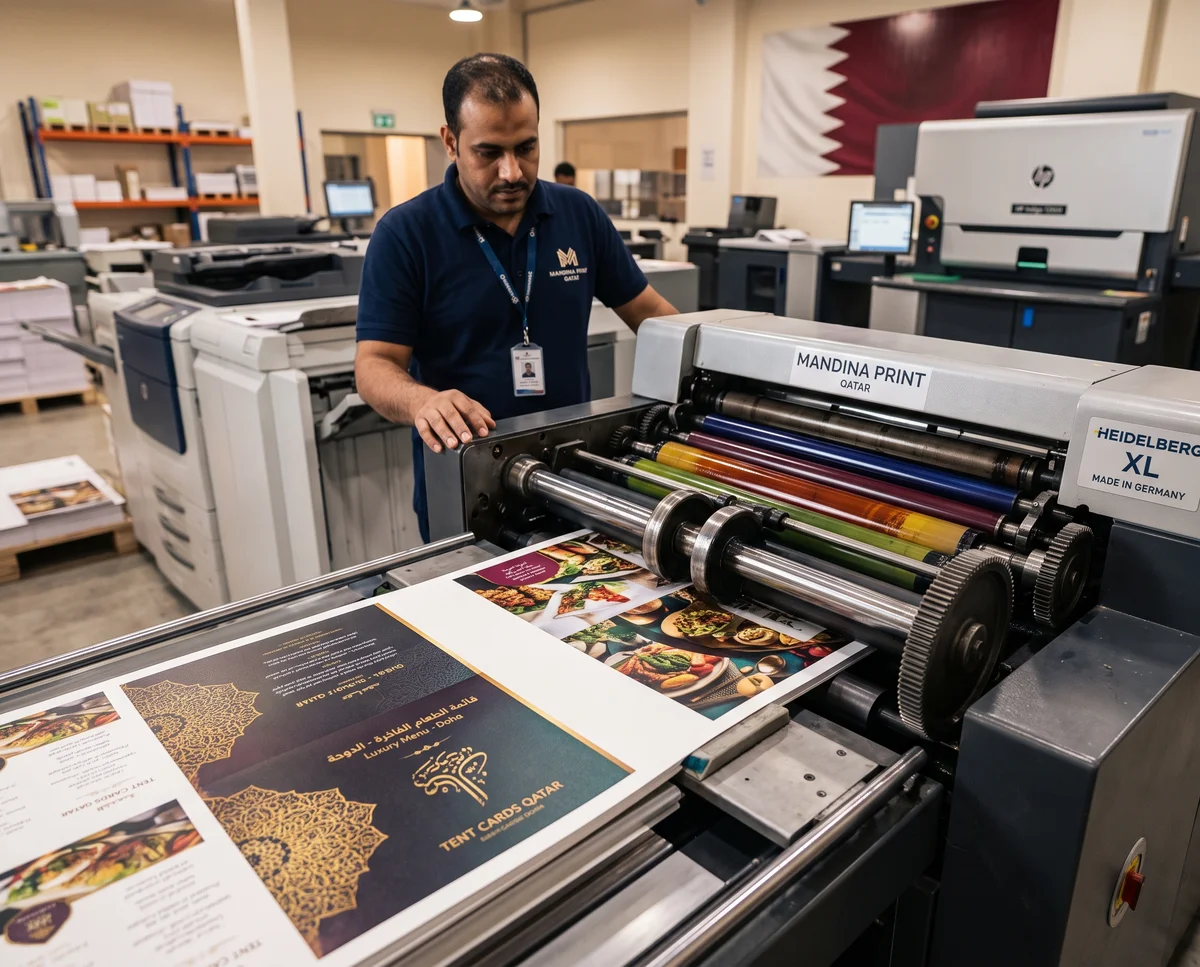
Tent Card & Table Promo Printing and Offer Menus in Qatar
In restaurants, cafés and hotels, there's a piece of prime advertising space that most people overlook: the tabletop, right in front of the customer. The promotional table card — better known as the "tent card" — is a small-format, high-impact marketing tool that reaches your customer at the exact moment they're ready to make a buying decision. In Qatar, with hospitality competition running high across Doha, Al Wakrah, Al Rayyan and Lusail, table cards and offer stands have become an effective way to raise average bill value and promote new items without spending a riyal more on advertising. In this guide we cover everything you need to know about materials, sizes, design and production.
What is a tent card and why does it work so well?
A tent card is a printed card made from heavy board, folded into a triangular or pyramid "tent" shape so it stands firmly on the table and displays its message on two or three sides. The secret to its effectiveness is that it sits directly in the customer's line of sight while they wait or browse the menu — a moment of high attention that no other advertising medium can offer.
Common uses in the Qatari market include:
- Promoting daily offers, signature dishes and combo deals.
- Displaying Wi-Fi codes or a QR code for the digital menu.
- Inviting guests to follow the restaurant on social media or leave a Google Maps review.
- Table numbers and reservations in hotels and event halls.
- Promoting loyalty programmes and membership cards.
- Announcing Ramadan, Eid and national day offers.
Available table card formats
1) Triangular tent card (two sides)
The most popular and most economical option. Printed on both sides and folded, with the base secured using double-sided tape or a slot lock. Ideal for rectangular tables where customers sit on either side.
2) Pyramid tent card (three sides)
Gives you three advertising panels and visibility from every angle — the best choice for round tables in cafés and wedding halls. It takes up slightly more space but is more stable than the triangular version.
3) Acrylic stand with printed insert
A clear or coloured acrylic holder with a printed sheet inside that can be swapped out weekly. Perfect for venues that update their offers constantly, and it delivers a premium look that suits Doha's hotels and fine-dining restaurants. It can be laser cut with your brand logo engraved on the base.
4) Metal or wooden stand
A permanent option built on an aluminium or MDF wooden base with a replaceable panel. More commonly used in lobbies and reception areas than on the tables themselves.
The right materials for Qatar's climate
A restaurant environment is tough on paper: humidity, spills, constant handling and daily cleaning. That makes your choice of material even more important than the design itself:
- 300–350 gsm art card: the standard choice — good rigidity at a reasonable price, and we recommend adding lamination.
- 400 gsm with matte lamination: a more premium feel with excellent stability, suited to mid-range and upscale restaurants.
- Synthetic stock (PP or PVC): 100% waterproof, tear-proof and stain-resistant — ideal for outdoor restaurants and open-air cafés along the Corniche.
- Natural kraft paper: a great fit for organic brand identities and speciality coffee shops, though less resistant to liquids.
- 3–5 mm acrylic: for permanent holders with changeable inserts.
Common sizes
- A7 (7.4×10.5 cm): small and neat — best for table numbers and QR codes only.
- A6 (10.5×14.8 cm): the most requested size in Qatar, balancing visibility with tabletop space.
- DL portrait (10×21 cm): slim and elegant, ideal for cafés with narrow tables.
- A5 (14.8×21 cm): for showcasing several items with photos, or for family restaurants with large tables.
An important note: calculate the card's height after folding, since the printed size includes the glued base. Send your file with the fold line clearly marked and a 3 mm bleed on every side. You can also review our guide to preparing print files before sending to avoid trimming errors.
Design rules that genuinely drive sales
A table card is read in under five seconds, so the design has to be direct:
- One message per side: don't cram three offers into a single panel.
- High-quality food photography: professional images noticeably lift order rates — avoid free stock photos from the internet.
- A clear price and a call to action: "Order now from your server" or "Scan the code to order".
- Bilingual content: Arabic and English are a must in the Qatari market, with one side per language if the copy runs long.
- Stick to your brand colours: the same approved fonts and colours used in your complete brand identity.
- Font size no smaller than 10 pt: dim restaurant lighting makes small type unreadable.
Finishes that make the difference
- Matte lamination: reduces glare under ceiling lights and gives a refined feel.
- Gloss lamination: makes food photography colours pop and wipes clean easily.
- Spot UV: highlights the logo or price with a targeted gloss accent.
- Gold or silver foil: a luxury touch that suits hotels and fine-dining restaurants.
- Die cutting: an unconventional shape, such as a cup silhouette or the restaurant's logo.
Integrating with the rest of your restaurant print
The best results come when the table card is part of a complete system: the menu, placemats, bags, cups and cashier receipts. Consistent colours and fonts across these items build a strong visual memory in the customer's mind. That's why we recommend producing your cards together with your menu design and printing in a single run — it saves on cost and guarantees colour consistency across every piece.
Quantities and cost
Cost depends on size, material, finishing and quantity. For small runs (50–300 pieces), digital printing is the better fit in terms of price and turnaround, while offset printing becomes more economical above 1,000 pieces. A practical tip: print enough to cover every table plus a 20% reserve for damage and replacements, and plan to refresh the design each season or campaign rather than printing a huge run that sits in storage until its offers expire.
Common mistakes to avoid
- Using lightweight paper (under 250 gsm), which lets the card bend and fall over.
- Neglecting a stable base, so the card shifts every time the AC blows.
- Placing the QR code too small or too close to the fold line, making it hard to scan.
- Leaving outdated prices on the cards after the menu has been updated.
- Piling more than one card on a single table, which makes it feel cluttered to the customer.
Order your table cards from Q Trend
At Q Trend we design and produce table cards and offer stands in every material and size for clients in Doha and across Qatar — from creative design and product photography right through to delivery, ready to place on the table. Whether you run a small café or a restaurant chain, we'll help you choose the material and finish best suited to your budget and your venue. Get in touch now on WhatsApp at +974 7784 9090 for an instant quote and samples of our previous work.
Frequently Asked Questions
What's the difference between a tent card and an acrylic stand?
What's the best size for a restaurant table tent card?
Can the card be protected against water and stains?
How long does it take to print table cards in Doha?
Need printing or advertising services in Qatar?
Contact Q Trend today for a free quote on your project in Doha and across Qatar.
Related Articles
Printing & Supplies for Farms and Pet Shops in Qatar: From Product Labels to Cage Signs
Printing & Supplies for Flower Shops and Gift Styling Businesses in Qatar: Gift Cards, Wrapping Paper and Bouquet Labels
Receipt Roll & Cashier Paper Printing for Shops and Restaurants in Qatar: Sizes, Materials and Customisation