Floor Graphics & Floor Decals in Qatar: Types, Materials and Installation
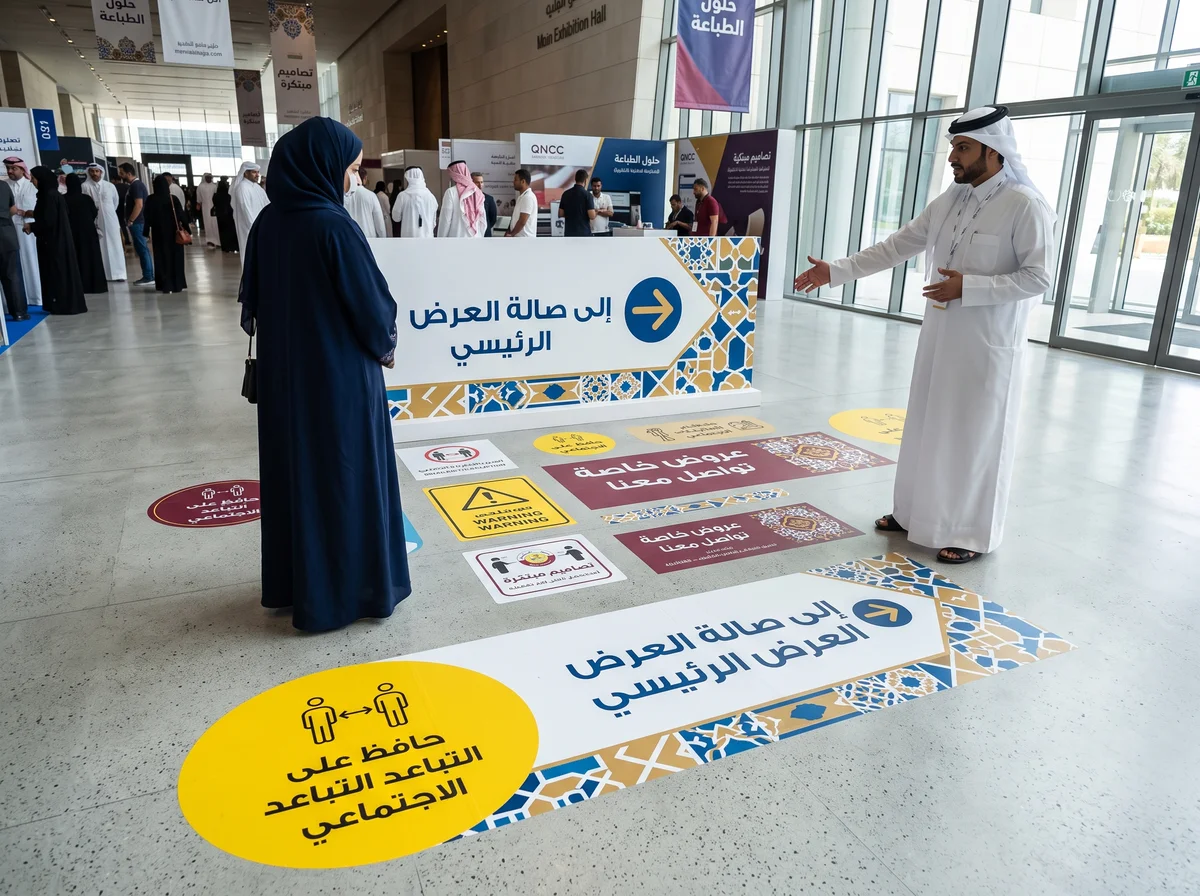
Amid the bustle of Doha's malls, exhibition entrances and hotel corridors lies a huge advertising space that many business owners overlook: the floor. It's a field of view every visitor is forced to pass through, and it costs far less than any other advertising medium with the same viewing rate. Floor stickers and floor graphics turn walkways into wayfinding and promotional tools at the same time — whether you're pushing a special offer, managing visitor flow, or reinforcing your brand identity inside the branch. In this guide we look at the material types used in Qatar, the best application for each one, and the correct installation steps that decide whether your sticker lasts months or days.
Why is the floor such an effective advertising space?
Behavioural studies in retail show that shoppers look down a great deal while walking, especially in busy aisles. Unlike hanging banners, which can be blocked from view or simply ignored, a floor sticker sits directly in the path of movement. Its main benefits:
- Directing movement: arrows and lines that lead visitors to a specific department, the payment counter or the emergency exit.
- On-the-spot promotion: announcing an offer or discount right at the shop entrance increases the chances of people walking in.
- Queue management: standing markers and spacing indicators in front of the cashier or service desks.
- Safety and warnings: wet floor alerts, equipment zones and pedestrian walkways inside warehouses.
- Event experiences: sponsor logos, exhibition maps and photo points inside stands.
Types of floor sticker materials
1. Indoor floor vinyl with anti-slip lamination
The most popular option in malls, shops and offices. Self-adhesive vinyl printed digitally at high quality, then covered with a textured anti-slip laminate that protects the print from abrasion and prevents slipping. Suitable for marble, ceramic, porcelain and smooth vinyl floors. Expected lifespan is 3 to 12 months depending on footfall intensity.
2. Heavy-duty outdoor vinyl
Designed for pavements, car parks and building entrances. A thicker material with stronger adhesive and UV-resistant lamination — a necessity in Qatar's climate, where asphalt surface temperatures reach brutal levels in summer. It requires a clean, reasonably level surface, and is best installed in the early morning hours to avoid applying it in high heat.
3. Carpet graphics
A fabric or polymer material with an adhesive engineered to grip carpet fibres, widely used in conference halls, hotels and exhibition stands across Doha. It peels away easily without leaving residue on the pile, making it ideal for sponsor logos and directional arrows inside showrooms.
4. Rigid floor panels
Printed acrylic, polycarbonate or aluminium panels fixed to the floor with screws or strong adhesive, used in factories, warehouses and areas where heavy trolleys pass and adhesive stickers simply don't survive for long. They are similar in concept to metal and aluminium signage in terms of durability, but with a flat, pedestrian-safe profile.
5. Stencils and floor paint
For permanent solutions in car parks and industrial walkways, floor paint is used with stencil templates to mark arrows, bay numbers and safety symbols. The longest-lasting option, but the least flexible when it comes to making changes.
Slip resistance: the point you can't compromise on
The key difference between a professional floor graphic and an ordinary sticker is the anti-slip laminate layer. Using a standard gloss sticker on the floor creates a dangerously slippery surface, especially at entrances where shoes come in wet. Approved materials carry a coefficient-of-friction rating (R9 or R10 and above), and this should be written into your order specification — particularly for public facilities and malls, which apply strict safety requirements in Qatar.
Floor graphic design rules
- Simplicity first: visitors are walking, not stopping to read, so stick to one short line, a logo and a clear arrow.
- Large, bold type: readable from at least two metres away — avoid thin and decorative fonts.
- High colour contrast: floors are usually light, so use dark colours or vice versa, while staying true to your brand palette.
- Reading direction: orient the text so it faces anyone approaching from the main direction of movement.
- The right size: a circle 60–100 cm in diameter works well in aisles, 100×60 cm rectangles suit entrances, and arrows should be 30 to 50 cm.
- Safety margin: leave a gap from tile edges to stop the edges lifting under foot traffic.
And if you're building an integrated campaign, it's best for the floor design to work in harmony with the rest of the branch elements — advertising signage, stands and wall graphics — all under one identity.
The correct installation steps
Most floor sticker failures come down to installation, not the material. The essential steps:
- Clean the surface thoroughly with a cleaner that removes wax and grease, then wipe it with alcohol and let it dry completely.
- Mark the position with masking tape before peeling off the backing paper to keep everything straight.
- Apply gradually from the centre outwards using a squeegee to push out air.
- Press down firmly on the edges in particular, as they are the first part to lift.
- Avoid walking over the sticker for roughly an hour so the adhesive can settle.
- Clean afterwards with a damp mop only — no abrasive materials or high-temperature steam.
Where are they used in Qatar?
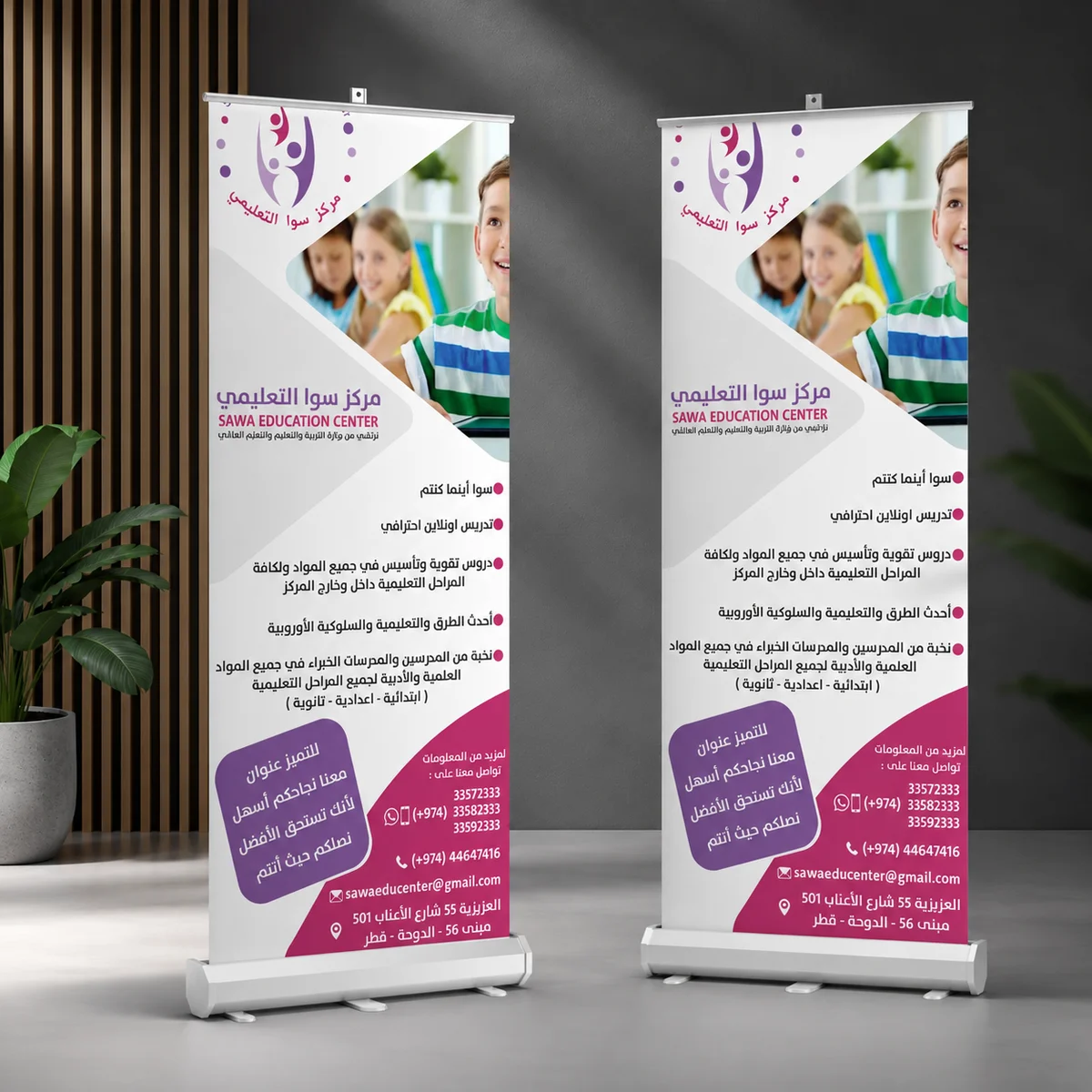
At Q Trend we produce floor graphics for clients across a wide range of sectors in Doha, Al Rayyan, Al Wakrah and Lusail: malls and shopping centres for seasonal campaigns, restaurants and cafés for order and waiting-area guidance, exhibition and conference halls for sponsor logos and stand maps, clinics and medical centres for organising patient flow, warehouses and logistics facilities for marking pedestrian walkways and loading zones, and car and furniture showrooms for highlighting offers. At temporary events they are often combined with roll-up banners and display stands to create a complete visual experience from the floor up to eye level.
Tips to extend the life of your sticker
- Avoid placing the sticker directly under a revolving door or at a shopping-trolley turning point.
- Ask for extra lamination if the location is one of the busiest spots.
- Keep a spare copy of the same print for a quick replacement if it gets damaged.
- Inspect the stickers regularly and remove any piece whose edges have started lifting, to prevent trip hazards.
- Set the campaign end date in advance and remove the sticker on schedule to guarantee clean removal.
At Q Trend we supply floor stickers in every material, with high-resolution printing, contour cutting and an installation service across all of Qatar's cities, plus a free consultation to help you choose the right material for your floor type and footfall level. Send us the area dimensions and a photo of the floor via WhatsApp on +974 7784 9090 and get a clear quote and a fast delivery schedule.
Frequently Asked Questions
How long do floor graphics last in high-traffic areas?
Do floor stickers leave marks when removed?
Can floor graphics be applied to carpet or rough flooring?
How much do floor stickers cost in Qatar?
Need printing or advertising services in Qatar?
Contact Q Trend today for a free quote on your project in Doha and across Qatar.
Related Articles
Safety Signs and Warning Signage for Worksites and Factories in Qatar: Types, Standards and Installation
Bakery & Sweets Printing in Qatar: Cake Boxes, Wrapping Paper and Ingredient Labels
Premium Print Finishes in Qatar: Spot UV, Gold Foil, Embossing and Lamination