Metal & Aluminium Sign Printing in Qatar: Types, Uses and Durability
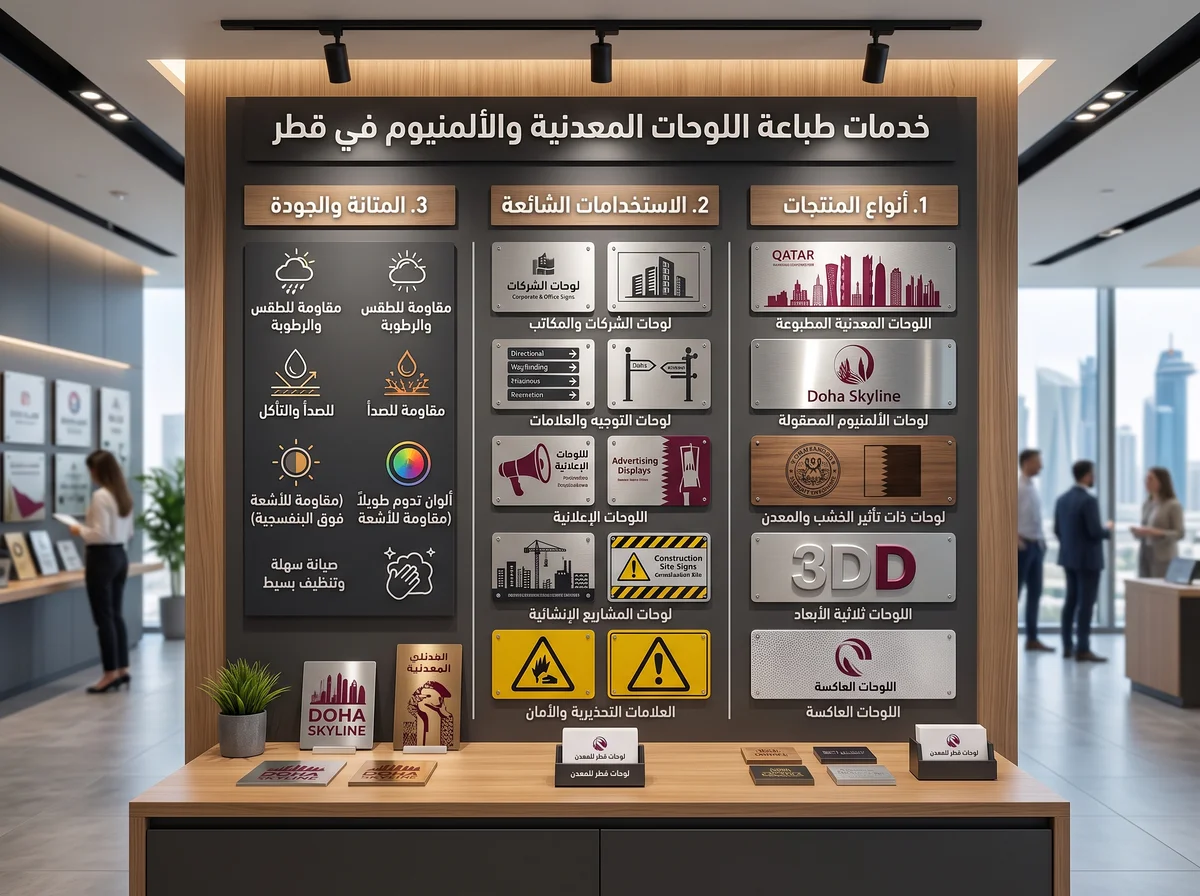
When you need a sign that still looks the same after years of Doha sun and Gulf humidity, metal is the first choice. Metal and aluminium signs aren't just a "tougher" alternative to Foamex or acrylic — they're a whole category with their own applications: safety signs in factories, equipment and asset numbering, identification plaques for buildings and villas, emergency and electrical signage, and even premium signs for office and clinic entrances. In this guide we explain the types of metal sheet available in Qatar, the difference between printing and engraving, and how to pick the right material for each location.
Why choose metal over other materials?
Plastic materials are excellent in the right place, but metal wins out in three specific cases: harsh environments (heat, oils, chemicals, frequent washing), applications that demand a very long life with no replacement, and locations that call for a refined, formal look. On top of that, metal signage is a regulatory requirement on many industrial and construction projects in Qatar, where permanent signs that cannot be damaged or removed are stipulated.
- Weather resistance: it won't crack or warp in the summer heat the way some plastic sheets do.
- Fire resistance: non-combustible, which makes it mandatory for emergency and fire-exit signage.
- Professional appearance: brushed finishes and matt silver create a strong corporate impression.
- Long service life: 7 to 15 years for exterior signs produced with the correct materials.
Types of metal sheet used in Qatar
1) Plain aluminium sheet
The most common option and the best balance of price and durability. It's lightweight, rust-free, and takes direct UV printing, cutting and bending. Available in thicknesses from 0.5 to 3 mm, it's used for identification plaques, parking signs, building number plates and warning signs.
2) Anodized aluminium
An electrochemically treated surface that gives the sheet a hard layer resistant to scratching and corrosion. It's the gold standard for laser engraving, because the text appears in a light tone on a dark background (or the reverse) with very high precision. It's used for equipment plates, asset numbers and technical specification plates in factories and engineering projects.
3) Stainless steel
The heaviest and most premium option. Grade 304 suits interior use and normal exterior conditions, while grade 316 is for coastal and industrial environments with high salinity. It's used for office entrance fascias, laser-cut company logos, and luxury nameplates for clinics and law firms in Doha, West Bay and The Pearl.
4) Aluminium composite panel (ACP / Alucobond)
A panel made of two aluminium skins with a polymer core between them, in 3 or 4 mm thickness. It combines light weight with surface rigidity and doesn't warp in large formats. It's the real foundation of most shop signs and commercial building fascias, and it's used as the backing panel for mounting illuminated 3D letters.
5) Brass and bronze
These are used for commemorative plaques, project inauguration plaques and heritage-style nameplates. They're engraved chemically or by laser with colour infill, and need a clear protective coat to prevent oxidation.
Production techniques: how is the design transferred onto metal?
- Direct UV printing: inks cured by ultraviolet light onto the metal surface, delivering full colour, photographs and logos with fine gradients. Best for colourful promotional and identification signs.
- Laser engraving: a permanent mark cut into the metal that won't wipe or wash away with solvents. Best for serial numbers, barcodes and specification plates.
- Laser or CNC cutting: for cutting out logos, shapes and dimensional metal letters with clean edges.
- Powder coating: gives a uniform, hard, scratch-resistant colour, and is applied before printing or engraving to set the sign's background colour in line with your brand identity.
- Chemical etching: for extremely fine detail on stainless steel and brass, with the etched areas filled with coloured enamel.
- Cut vinyl application: a fast, economical solution for large lettering on metal panels, especially for temporary signs.
The most requested applications in the Qatari market
- Health, safety and environment (HSE) signage: warnings, mandatory PPE notices, emergency exits — in both Arabic and English, as project standards in Qatar require.
- Equipment and asset plates: serial numbers, inspection dates, voltage ratings, load capacities.
- Building and villa signage: unit numbers, family names, floor signs and lift directories.
- Office and clinic signage: names of doctors and managers in brushed stainless steel or anodized aluminium.
- Car park and internal traffic signs: visitor parking, accessible parking bays, entry and exit directions.
- Commemorative plaques: project openings, event sponsors and corporate appreciation plaques.
Details that make the difference in quality
Many problems with metal signs come not from the metal itself but from the small details. First, edge finishing: sharp edges are a safety hazard and get rejected at official handover, so we either smooth or fold them. Second, rounded corners with a 3–5 mm radius prevent cracking and improve the look. Third, fixing holes: their number, diameter and position must be decided at the design stage, not after printing. Fourth, the mounting method: stainless steel screws with standoffs for a premium look, industrial double-sided tape for smooth interior surfaces, or brackets and posts for free-standing exterior signs.
And finally the design itself: metal reflects light, so you need strong colour contrast, simple and relatively bold typefaces, and no very pale gradients that disappear under reflection. If your brand files aren't ready in vector format, it's best to start with a complete brand identity so that all your signs and print work come out in the same colours and fonts.
How to compare prices intelligently
The price of a metal sign is determined by four factors: the type of metal, the thickness, the production technique (printing is cheaper than engraving, and engraving is cheaper than dimensional cutting), and the quantity. Large orders reduce the unit cost noticeably, because set-up and cutting are done only once. That's why we always recommend consolidating your annual requirement for safety signs and number plates into a single order rather than scattered ones. And if you need large-format signs for fascias, review the options for advertising signage in Qatar to compare metal with other materials before you decide.
Our service at Q Trend
At Q Trend we deliver metal and aluminium signage from the site survey and measurement stage, through design and proof approval, then cutting and printing or engraving, and finally installation in Doha and across every city in Qatar. We work with industrial and contracting projects, offices and clinics, shops and restaurants, and we supply bilingual signage compliant with safety requirements, with a warranty on both material and workmanship.
Need permanent metal signage for your project or office? Send us the dimensions and photos or your design file on WhatsApp +974 7784 9090 and we'll come back to you with a clear quotation and a firm production time, along with a recommendation on the most suitable material for your location in Qatar.
Frequently Asked Questions
What's the difference between a printed metal plate and a laser-engraved one?
Can metal signage withstand Qatar's heat and sun?
What sizes and thicknesses are available for aluminium signs?
How long does a metal sign order take in Qatar?
Need printing or advertising services in Qatar?
Contact Q Trend today for a free quote on your project in Doha and across Qatar.
Related Articles
Printing & Supplies for Flower Shops and Gift Styling Businesses in Qatar: Gift Cards, Wrapping Paper and Bouquet Labels
Receipt Roll & Cashier Paper Printing for Shops and Restaurants in Qatar: Sizes, Materials and Customisation
Engineering & Plotter Printing in Qatar: Sizes, Materials and Binding