Promotional Tote Bags & Fabric Bag Printing in Qatar: Types, Materials and Print Methods
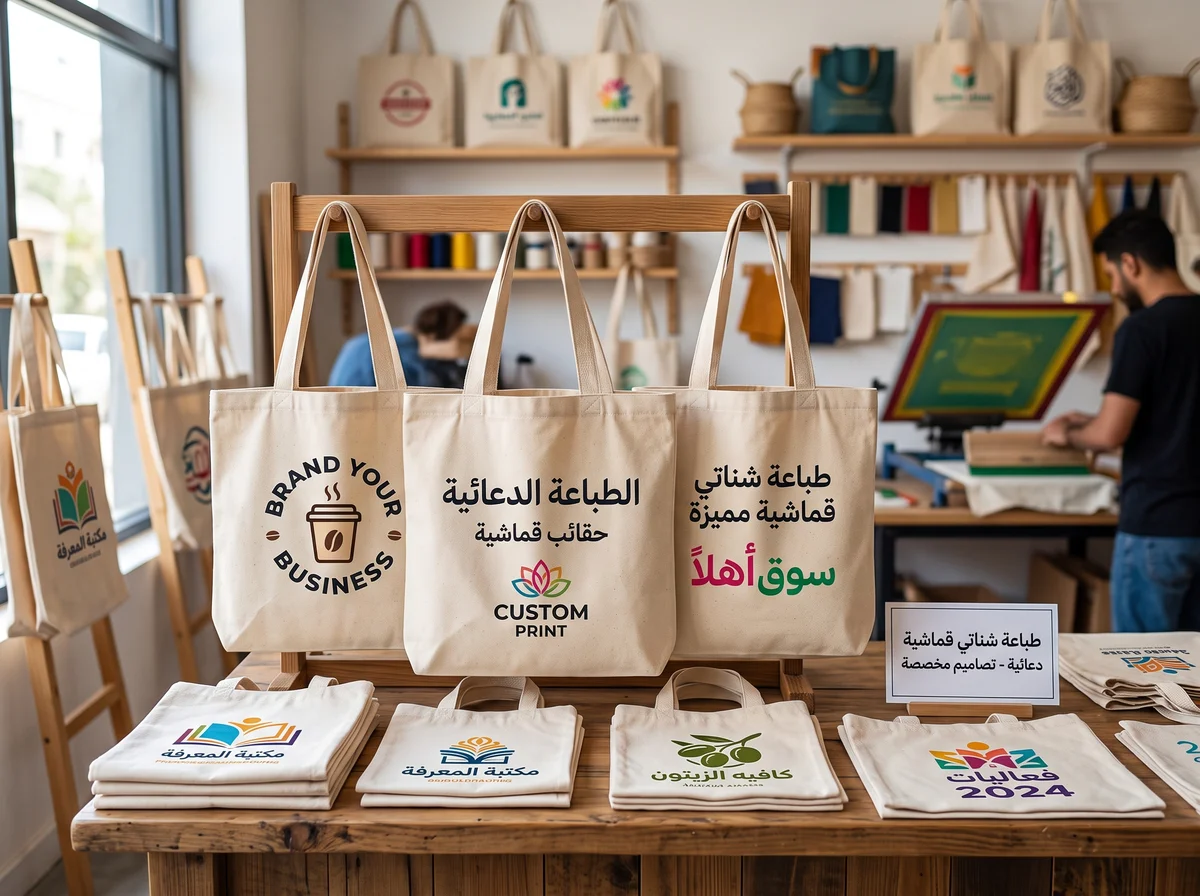
The promotional tote bag is one of the smartest marketing tools any brand in Qatar can invest in. It isn't just a giveaway handed out at an exhibition or a grand opening — it's a mobile advertising medium that carries your logo through the streets of Doha, into malls, universities and offices for months, and possibly years. And with the global and local shift away from plastic bags, fabric bags have become a practical, environmentally responsible choice that combines everyday usefulness with real visual presence for your brand. In this guide we cover the types of bags, the available materials, printing and embroidery techniques, the most common sizes, and how to choose the right bag for your business.
Why invest in promotional tote bags?
The biggest advantage of a fabric bag is its remarkably long "advertising lifespan" relative to its cost. A flyer is read once and thrown away; a bag is used for shopping, work and travel — and every single use is free exposure for your logo.
- Low cost per visual impression: a single bag can generate thousands of views over its lifetime.
- High perceived value: the recipient feels they've been given a useful gift, not a promotional leaflet.
- Eco-friendly: it supports your brand's image as a responsible organisation — something government entities and major companies in Qatar genuinely value.
- Versatile: ideal for exhibitions, conferences, openings, retail stores, hotels, schools and universities.
- Generous design area: the front panel works like a compact advertising board, with room for your logo, a message and contact details.
Material types: how to choose the right fabric
1. Natural cotton
The most popular option. It's measured in grams per square metre (GSM): lightweight cotton at 100–140 gsm suits large-volume distribution and mass events, while 180–220 gsm gives a better feel and greater durability. Cotton takes print beautifully and delivers crisp, clear colours.
2. Heavy canvas
A dense cotton fabric at 240–340 gsm that holds its shape upright and carries substantial weight. Perfect for premium gifts, conference bags, and retailers who sell the bag as a product in its own right. It can be made with a gusseted base, reinforced edges and leather handles.
3. Jute and burlap
A natural material with a coarse texture that looks artisanal and luxurious at the same time. It's widely used for Ramadan gifts, national occasions and hospitality hampers in Qatar's hotels and resorts. Logos are applied by screen printing or on a stitched-on printed fabric patch.
4. Non-woven
An economical non-woven material — lightweight and available in a wide range of colours — well suited to very large distribution volumes in promotional campaigns, pharmacies and exhibitions. Its lower cost makes it the ideal solution for tighter budgets while still looking presentable.
5. Polyester and nylon
Light, foldable and relatively water-resistant. A great fit for foldable bags, sports bags and drawstring backpacks handed out at sporting and school activities.
Printing and finishing techniques
The technique you choose determines the quality of your logo, how long it lasts, and the unit cost. Here are the main options available in Qatar:
- Screen printing: the best choice for large runs and designs of one to three colours. Excellent durability and a very low unit cost as quantities increase.
- DTF / transfer printing: suited to multi-colour designs, photographs and gradients, and works for small quantities without high set-up costs.
- Direct-to-garment (DTG) digital printing: high detail on light-coloured cotton fabrics — ideal for artistic designs and samples.
- Embroidery: gives a premium, raised feel and outlasts every other technique; the preferred option for corporate, banking and hotel logos.
- Stitched patches: a printed or embroidered logo on a patch sewn onto the bag — an elegant solution for jute and dark canvas.
- Hot foil stamping: a gold or silver touch for upscale gifts and special occasions.
Sizes and technical details
There's no one-size-fits-all, but these are the most requested dimensions:
- 38 × 42 cm: the classic tote bag size, fits A4 documents and booklets.
- 35 × 40 cm with a 10 cm gusset: ideal for conference bags carrying a notebook, a water bottle and small gifts.
- 30 × 35 cm: a compact size for retail shops, gift stores and pharmacies.
- 45 × 50 cm: a large size for shopping, furnishing outlets and clothing stores.
And don't overlook the details that make a difference: handle length (35 cm short handles for the hand, 65–70 cm long handles for the shoulder), triangle-stitched reinforcement where the handles meet the bag, and adding an internal pocket or a top zip for premium bags.
Usage ideas by sector
- Retail stores and boutiques: replace plastic bags with a stylish branded fabric bag customers will reuse.
- Exhibitions and conferences in Doha: the visitor bag that holds brochures and gifts, coordinated with the rest of your printed material such as brochures and display stands.
- Hotels and resorts: a guest bag or beach bag in hard-wearing canvas.
- Schools and universities: bags for student activities and events in your institutional colours.
- Government entities and awareness campaigns: bags carrying the campaign logo, distributed at community activities.
- Year-end gifts and special occasions: a jute bag filled with hospitality products as a corporate gift.
Tips for designing a bag that delivers results
- Keep the design simple: a clear logo and a short message beat a crowded layout every time.
- Size the logo so it's legible from at least 3 metres away.
- Supply your artwork as a vector file (AI/PDF/EPS) with Pantone colours to guarantee an accurate colour match.
- Mind the contrast between fabric colour and ink colour; light printing on dark fabric needs a base layer.
- Leave a safe margin of 3–5 cm from the edges of the bag and from the stitching areas.
- Keep the bag consistent with the rest of your brand identity elements, from business cards to labels and stickers.
And if your brand identity isn't ready yet, it's best to start there first. Take a look at our article on brand identity and logo design for companies in Qatar to understand the essential steps before printing on any promotional product.
What affects the price?
The cost of a promotional bag in Qatar comes down to several factors: the type of fabric and its weight in gsm, the size and whether it has a base or gussets, the quantity ordered (prices drop noticeably beyond 300 and 1,000 pieces), the number of print colours, the technique used (embroidery costs more than printing), plus extra details such as zips, pockets and special handles — and finally the turnaround time, if the job is urgent.
Why Q Trend?
At Q Trend we offer our clients in Doha and across every city in Qatar a wide selection of fabric bags in cotton, canvas, jute and non-woven materials, along with a full design service and a pre-production sample, plus printing and embroidery executed to a standard that stands up to daily use. We handle small quantities for events and large orders for institutions and government entities alike, with a clear commitment to deadlines.
Ready to turn your logo into a moving advertisement on the streets of Doha? Get in touch now on WhatsApp at +974 7784 9090, send us the quantity, the material you need and your logo, and we'll come back to you with a clear quote and free design suggestions.
Frequently Asked Questions
What's the best fabric for a promotional tote bag?
What's the minimum order quantity for bag printing in Qatar?
Will the print on a canvas tote bag survive washing?
How long does it take to produce promotional bags in Doha?
Need printing or advertising services in Qatar?
Contact Q Trend today for a free quote on your project in Doha and across Qatar.
Related Articles
Printing & Supplies for Flower Shops and Gift Styling Businesses in Qatar: Gift Cards, Wrapping Paper and Bouquet Labels
Receipt Roll & Cashier Paper Printing for Shops and Restaurants in Qatar: Sizes, Materials and Customisation
Engineering & Plotter Printing in Qatar: Sizes, Materials and Binding