Weather-Resistant Outdoor Signage in Qatar: How to Make It Stand Up to Sun, Humidity and Dust
Qatar's climate puts every outdoor sign through a brutal test: scorching sun that pushes surface temperatures past 70°C in summer, high humidity rolling in from the Gulf, seasonal dust storms, and sharp temperature swings between day and night. The result is that many businesses in Doha find their sign faded, cracked or peeling at the edges after just a few months. The problem usually isn't the design — it's the choice of material, finish and installation method. In this guide we explain how an outdoor sign is built to genuinely survive in Qatar, and what the practical differences are between the available options.
What actually destroys outdoor signs in Qatar?
Understanding the forces at work is the first step to specifying the right build:
- Ultraviolet radiation (UV): the number one cause of colour fading, and it hits reds, oranges and light blues hardest.
- Heat and expansion: daily expansion and contraction of materials causes banners to wrinkle and sag, and adhesives to lift off surfaces.
- Humidity and salt: accelerates corrosion of screws, metal frames and electrical connections in illuminated signs.
- Dust and sand: scratches glossy surfaces, dulls the clarity of acrylic and gradually blocks light output.
- Wind: tears poorly secured banners and puts strain on the support structures of large signs.
The right materials for outdoor use
1) Cast vinyl vs. calendered vinyl
Cast vinyl is thinner and far more dimensionally stable, making it ideal for curved surfaces and long-term use (5–7 years). Calendered vinyl is cheaper and heavier, and suits flat surfaces and short-term campaigns (1–3 years). Picking the wrong type is the most common reason edges start curling just weeks after installation.
2) Flex banner in different weights
Flex weight is measured in grams per square metre: 440 gsm works for short-term use, while 510–650 gsm is right for building façades and large hoardings. For wind-exposed façades we recommend mesh flex, which relieves air pressure and prevents tearing. We cover the details of this material under our banner and flex printing and installation service.
3) Aluminium composite and metal sheet
ACP panel at 3–4 mm with a PVDF coating is the gold standard for shopfronts in Qatar: lightweight, rust-free and resistant to heat distortion. Powder-coated aluminium, meanwhile, is the best choice for frames and posts.
4) Acrylic and polycarbonate
Acrylic delivers excellent gloss and clarity for illuminated letters, but it scratches more easily and is prone to thermal cracking. Polycarbonate offers greater mechanical strength and suits busy public areas. In every case, choose UV-resistant grades to avoid yellowing.
Inks: the difference you only see after a year
A print can look perfect on handover day, but the ink is what determines how the sign looks 12 months later:
- Solvent and eco-solvent inks: the most widely used for outdoor work. They penetrate into the vinyl and deliver good water and sun resistance for up to 3 years without lamination — and longer with it.
- Latex ink: eco-friendly and odourless, suitable for interior and sheltered exterior façades; it needs lamination for long-term fully exposed use.
- UV-cured ink: printed directly onto rigid substrates such as Forex, acrylic and aluminium, giving high colour stability and scratch resistance.
The practical rule: always ask for the ink type and the expected durability in writing before approving a quotation — it matters far more than the price difference itself.
Protective finishes: your first line of defence
An outdoor lamination layer is the cheapest insurance you can buy for your sign:
- Gloss UV lamination: more vibrant colours, but it shows dust and reflections — best for shaded locations.
- Matte lamination: cuts glare and suits façades in direct sunlight as well as signs at eye level.
- Anti-scratch layer: essential in sandy, high-traffic areas such as entrances and car parks.
- Protective varnish on metal: shields direct-to-aluminium printing from flaking.
Installation: half the success of any sign
Even the best material fails with poor installation. Here's what to insist on in Qatar:
- Clean the surface thoroughly of dust and oils with alcohol before applying vinyl.
- Avoid installing at peak heat or immediately after rain; the ideal temperature range is 15–30°C.
- Leave a ventilation gap between the sign and the wall to reduce heat build-up.
- Use stainless steel screws and fixings instead of galvanised steel near the coast.
- Secure banners on all sides with eyelets every 50 cm to distribute wind pressure.
- Check municipality requirements on sign dimensions, projection and illumination before you build.
Design decisions that extend a sign's life
The design itself can soften the impact of the weather:
- Use ink-rich colours such as black and deep blue — they fade far more slowly than light or neon shades.
- Avoid wide, soft gradients, because uneven fading shows up very clearly in them.
- Stick to bold strokes and larger details; dust and scratches hide fine detail.
- Plan for partial replacement: make the promotional element a separate, swappable panel instead of replacing the whole sign.
And if you're weighing up different shopfront types, our shop signage guide helps you compare the options according to your business type and location.
A suggested maintenance schedule for Qatar's climate
- Monthly: a quick visual check of edges, lighting and connections.
- Every two months: clean with lukewarm water, a neutral cleaner and a microfibre cloth.
- Every 6 months: tighten fixings, inspect frames for corrosion and clean LED modules.
- After every dust storm or heavy rain: check drainage and clear sand build-up beneath the frame.
This simple schedule can double the life of your sign, and it costs far less than reproducing it. For a deeper comparison of rigid materials, see our article on Forex and acrylic signs in Qatar.
Common mistakes we see in Doha
- Using indoor materials (such as coated paper or thin Forex) in fully exposed locations.
- Skipping lamination to save a small amount, then reprinting a few months later.
- Fixing the sign directly onto a damp wall with no insulation layer or ventilation gap.
- Choosing LED lighting that isn't rated for high temperatures, so its brightness drops quickly.
- Ignoring the sun's orientation when deciding between a gloss or matte finish.
Ready to build a sign that lasts for years?
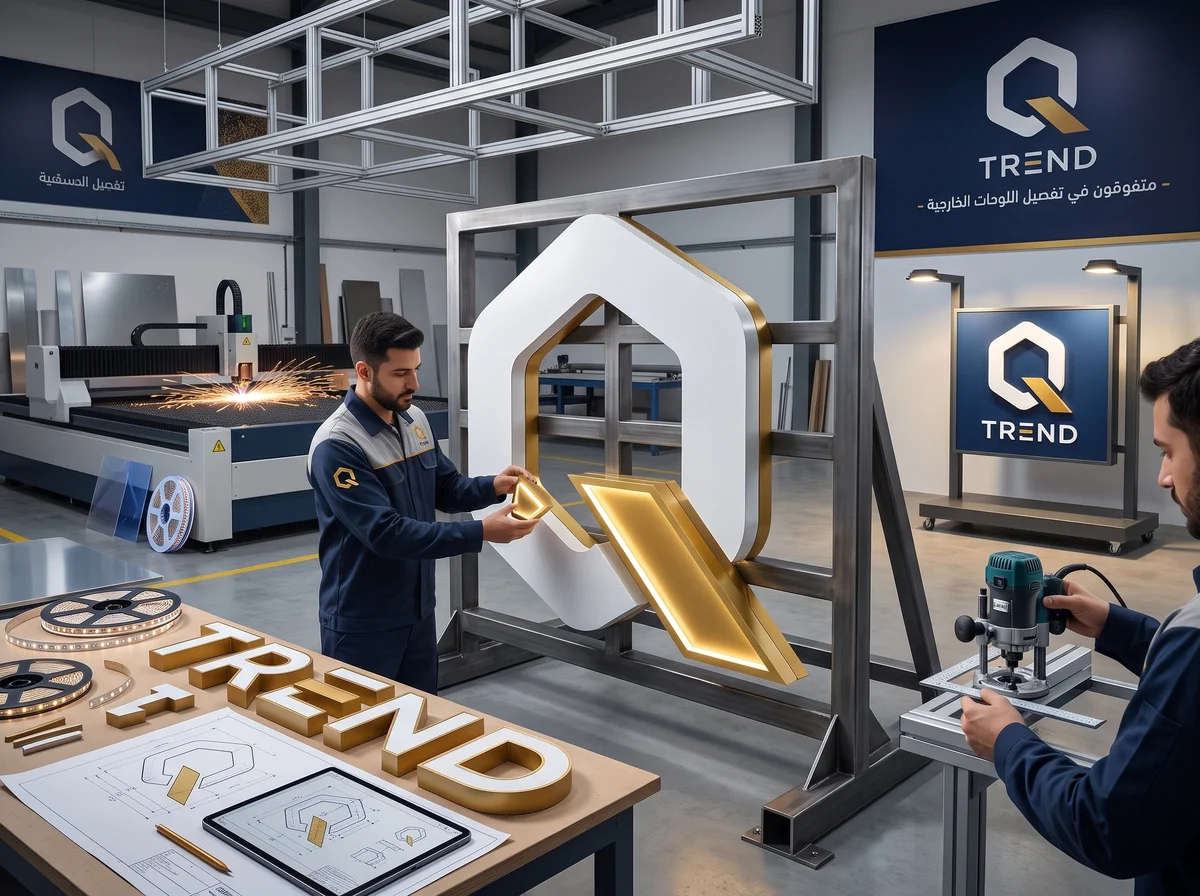
At Q Trend we select the material, ink and finish based on where your sign will actually sit in Qatar — the sun's orientation, proximity to the coast, dust levels and the required lifespan — then carry out the installation with a specialist team across Doha and every city in Qatar, backed by a clear workmanship guarantee. Contact us on WhatsApp at +974 7784 9090 and send a photo of the site, and we'll come back to you quickly with a technical recommendation and an estimated price.
Frequently Asked Questions
How long does an outdoor sign last in Qatar's climate?
What's the best material for a shopfront exposed to direct sunlight all day?
Does Qatar's high humidity affect illuminated signage?
How do I clean an outdoor sign without damaging the print?
Need printing or advertising services in Qatar?
Contact Q Trend today for a free quote on your project in Doha and across Qatar.
Related Articles
Printing & Supplies for Flower Shops and Gift Styling Businesses in Qatar: Gift Cards, Wrapping Paper and Bouquet Labels
Receipt Roll & Cashier Paper Printing for Shops and Restaurants in Qatar: Sizes, Materials and Customisation
Engineering & Plotter Printing in Qatar: Sizes, Materials and Binding